Sep 23, 2026News & Insights
DMX512 RGBW 20x20 Neon Flex | Pixel Control & Wiring Guide
Learn how DMX512 RGBW 20x20 neon flex works, including pixel control, wiring, controllers, chasing effects and specification for architectural lighting.
DMX512 RGBW 20x20 Neon Flex: Pixel Control, Wiring & Architectural Lighting Guide
DMX512 RGBW 20x20 neon flex combines continuous linear illumination with programmable RGBW pixel control, making it suitable for architectural, hospitality, entertainment and other dynamic lighting projects.
But when specifying DMX neon flex for a real project, the most important questions are usually not simply “Is it RGBW?” or “Does it support DMX512?”
Lighting designers, contractors and system integrators also need to know:
- How many pixels can be controlled?
- How are RGBW channels addressed?
- Which DMX controller is compatible?
- How should power and signal wiring be arranged?
- What happens on longer runs?
- Can the neon flex be customized for a specific installation?
This guide explains how DMX512 RGBW 20x20mm Neon Flex works and what should be confirmed before specifying it for a lighting project.
What Is DMX512 RGBW 20x20 Neon Flex?
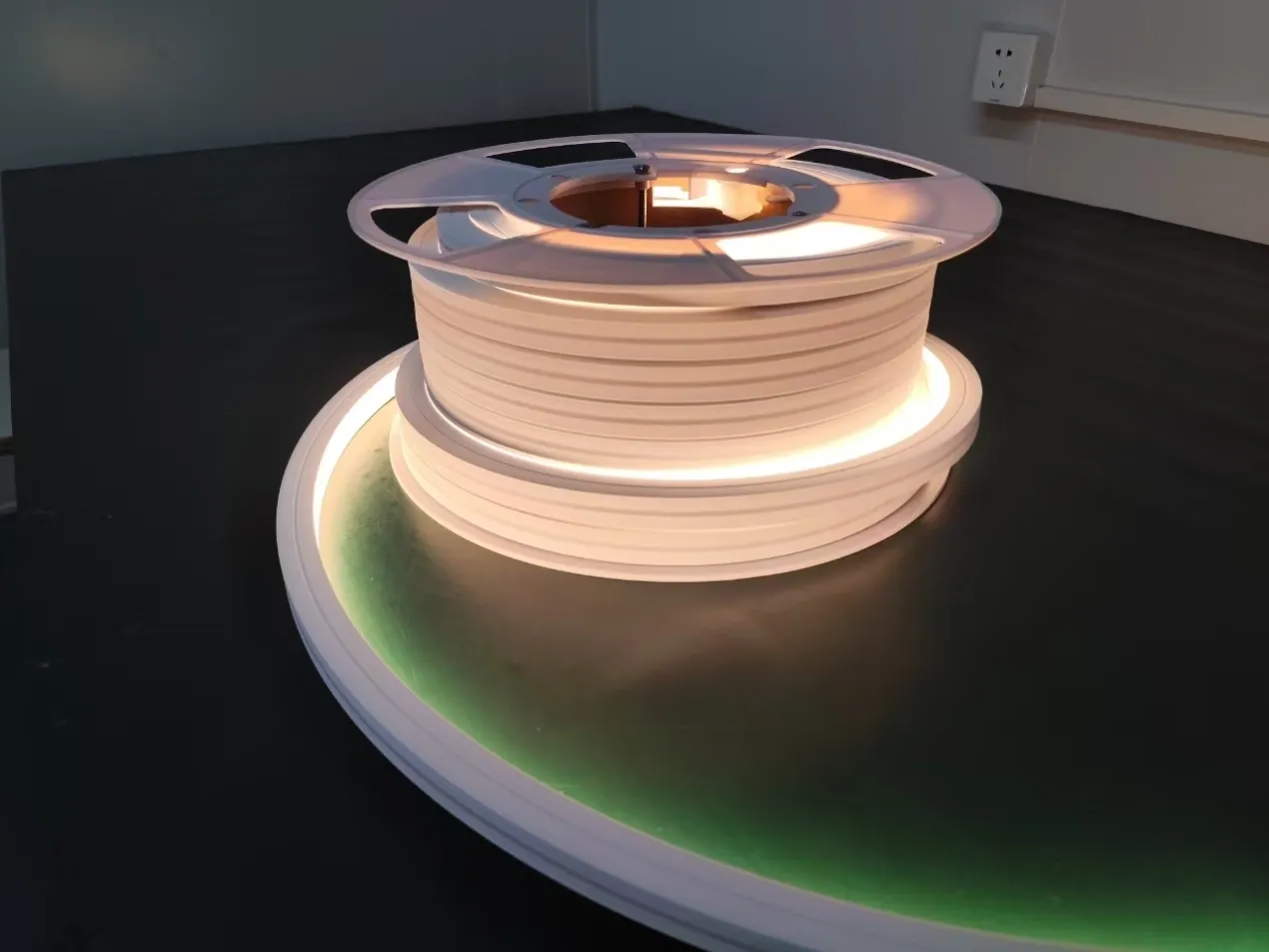
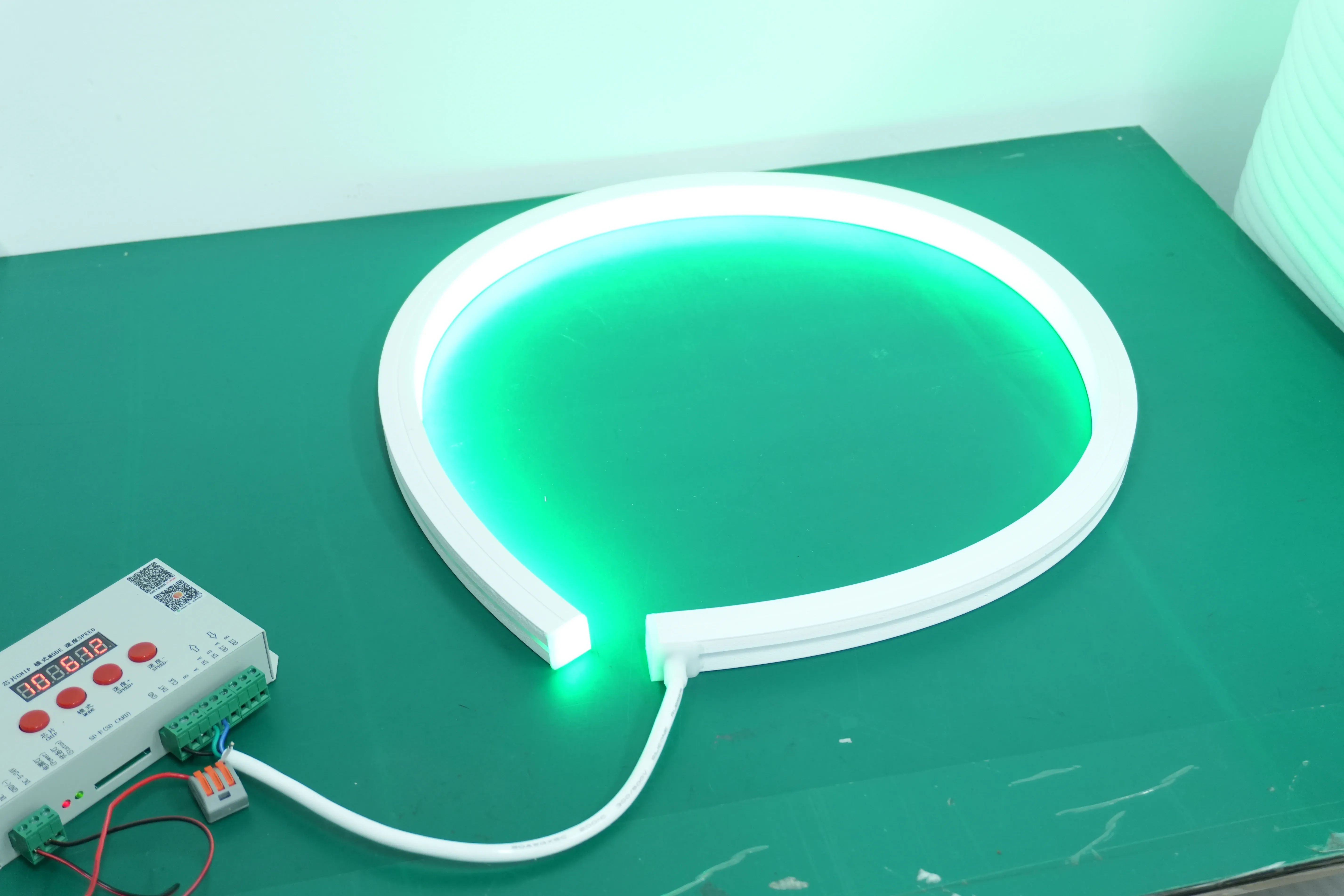
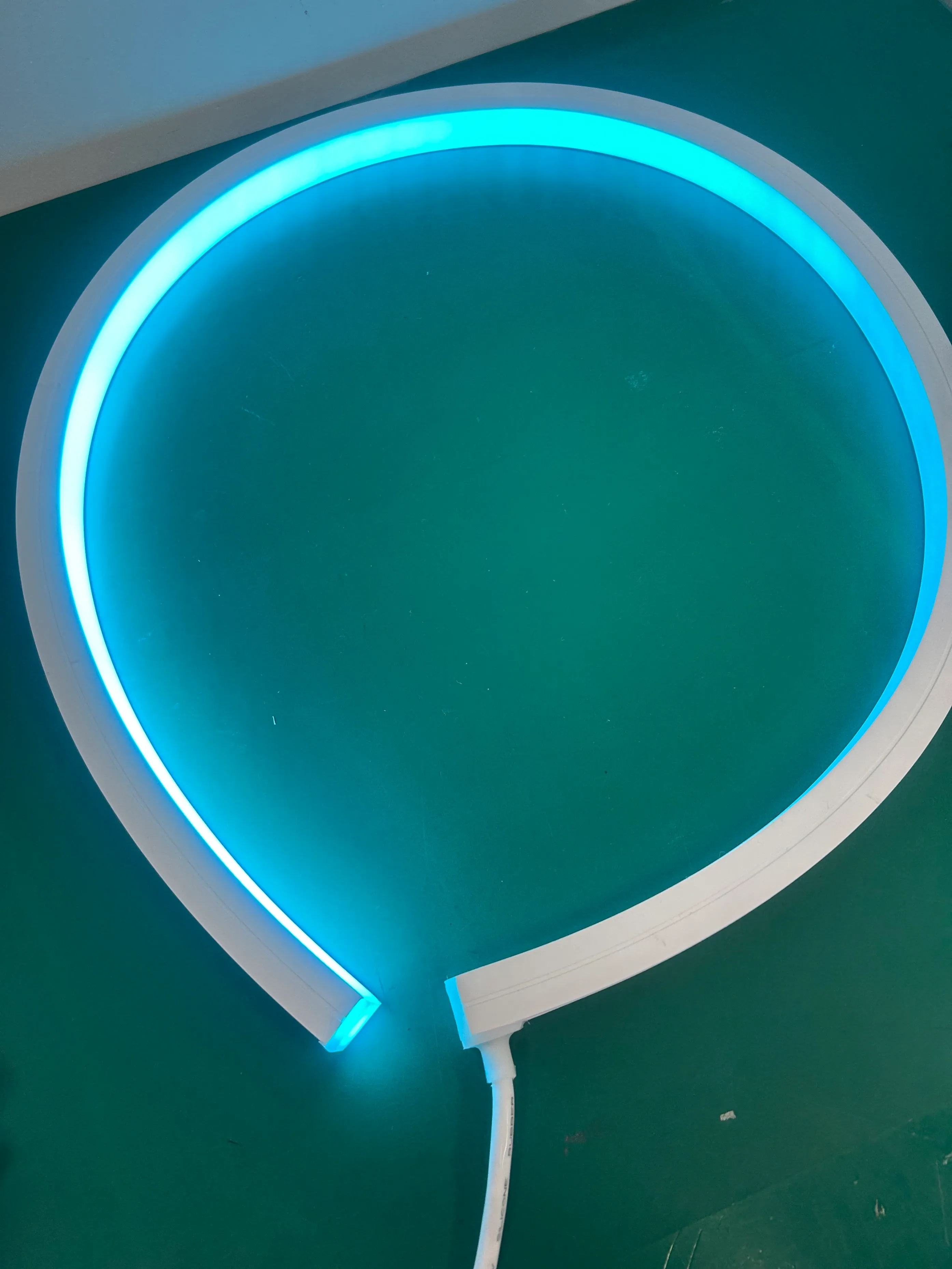
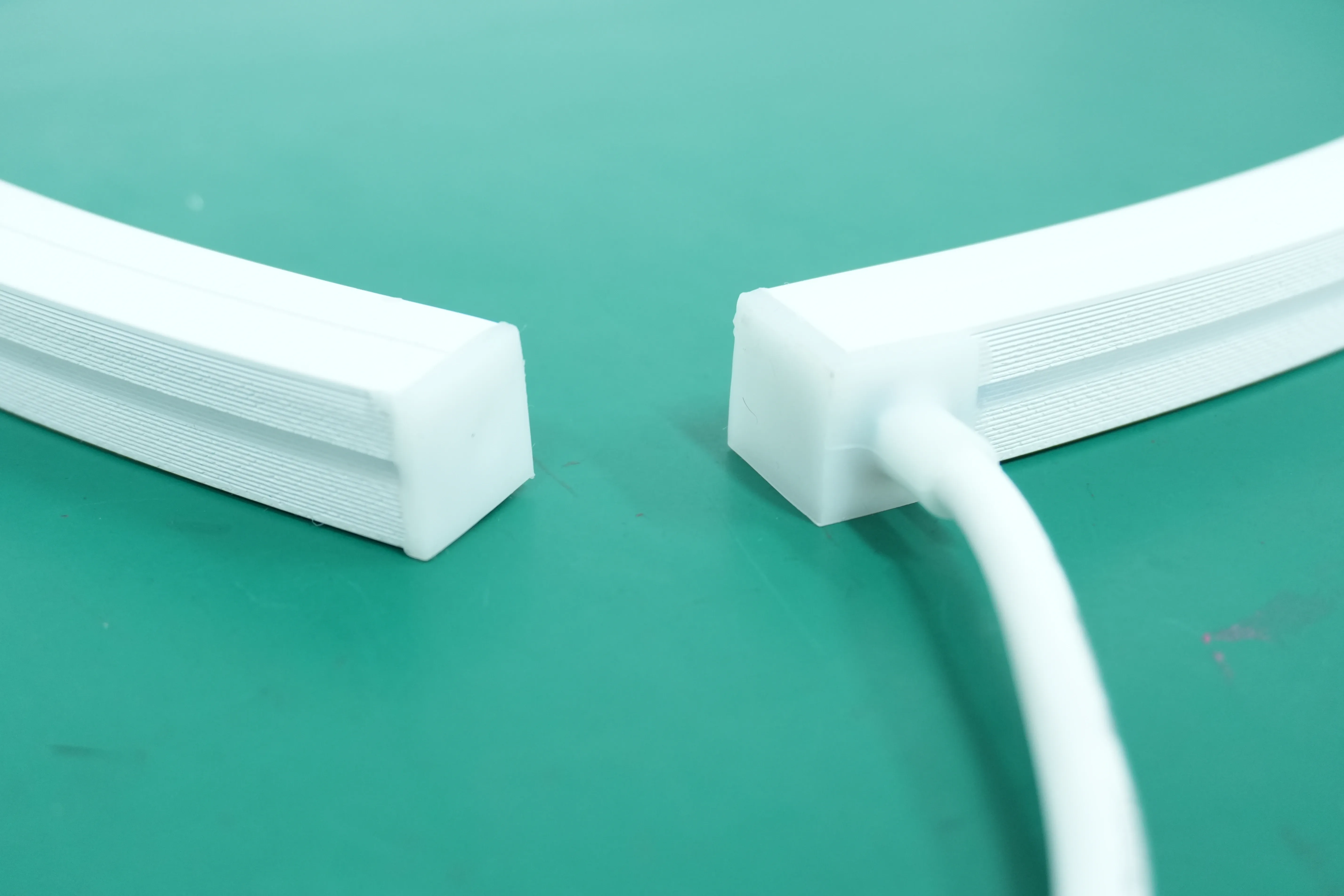
DMX512 RGBW 20x20 Neon Flex is a flexible linear lighting product combining a 20mm × 20mm silicone neon profile, RGBW LEDs and programmable digital control.
Unlike a conventional RGBW LED strip with exposed LEDs, neon flex uses an integrated diffuser structure to create a more continuous-looking illuminated line.
This makes it particularly useful where the light itself forms part of the architectural design.

How Does DMX512 RGBW Neon Flex Work?
A DMX-controlled neon flex system can be understood as three connected parts:
DMX controller → control signal / driver IC → RGBW neon pixels
The controller sends lighting instructions, while the IC architecture inside the neon flex determines how individual pixels or pixel groups respond.
This distinction is important.
DMX512 is the control protocol. It does not by itself determine how many LEDs can be controlled individually.
The actual control resolution depends on the IC and internal pixel configuration of the neon flex.
RGBW: Four Channels of Color Control
RGBW combines:
Channel | Function |
|---|---|
R | Red |
G | Green |
B | Blue |
W | Dedicated white |
RGB channels can be mixed to create different colors, while the additional white channel provides dedicated white-light output.
This makes RGBW useful for projects that require both dynamic colored effects and white illumination.
For architectural projects, this can be particularly useful because the same linear lighting element can support different lighting scenes instead of being limited to RGB effects.
Pixel Control: The Most Important Specification to Check
This is where many DMX neon flex specifications become confusing.
Terms such as:
LED / pixel / IC / segment / channel
do not necessarily mean the same thing.
For example, several LEDs may form one controllable pixel, while one IC may control one or multiple pixel groups depending on the product architecture.
Therefore, before selecting an addressable DMX neon flex, ask:
How many independently controllable pixels are there per meter?
That question is usually more useful than simply asking how many LEDs are installed per meter.
For our current referenced configuration, the control architecture uses SM18512PS, with 12 ICs in the referenced configuration, and the supplied technical information indicates 7 pixel points per IC.
The exact relationship between each IC, pixel group and RGBW channel should be confirmed against the final project configuration before programming.
Why does pixel density matter?
Higher control resolution allows lighting effects to change over shorter sections of neon flex.
This can affect effects such as:
- chasing
- flowing colors
- gradients
- sequential effects
- section-by-section color changes
- synchronized architectural animations
Therefore, the appropriate pixel configuration depends on the visual effect required by the project.
What Can DMX512 RGBW Neon Flex Do?
With a compatible controller and correctly configured system, DMX RGBW neon flex can be programmed for effects such as:
Static Colors
One consistent RGBW color across the installation.
Color Transitions
Gradual transitions between programmed colors.
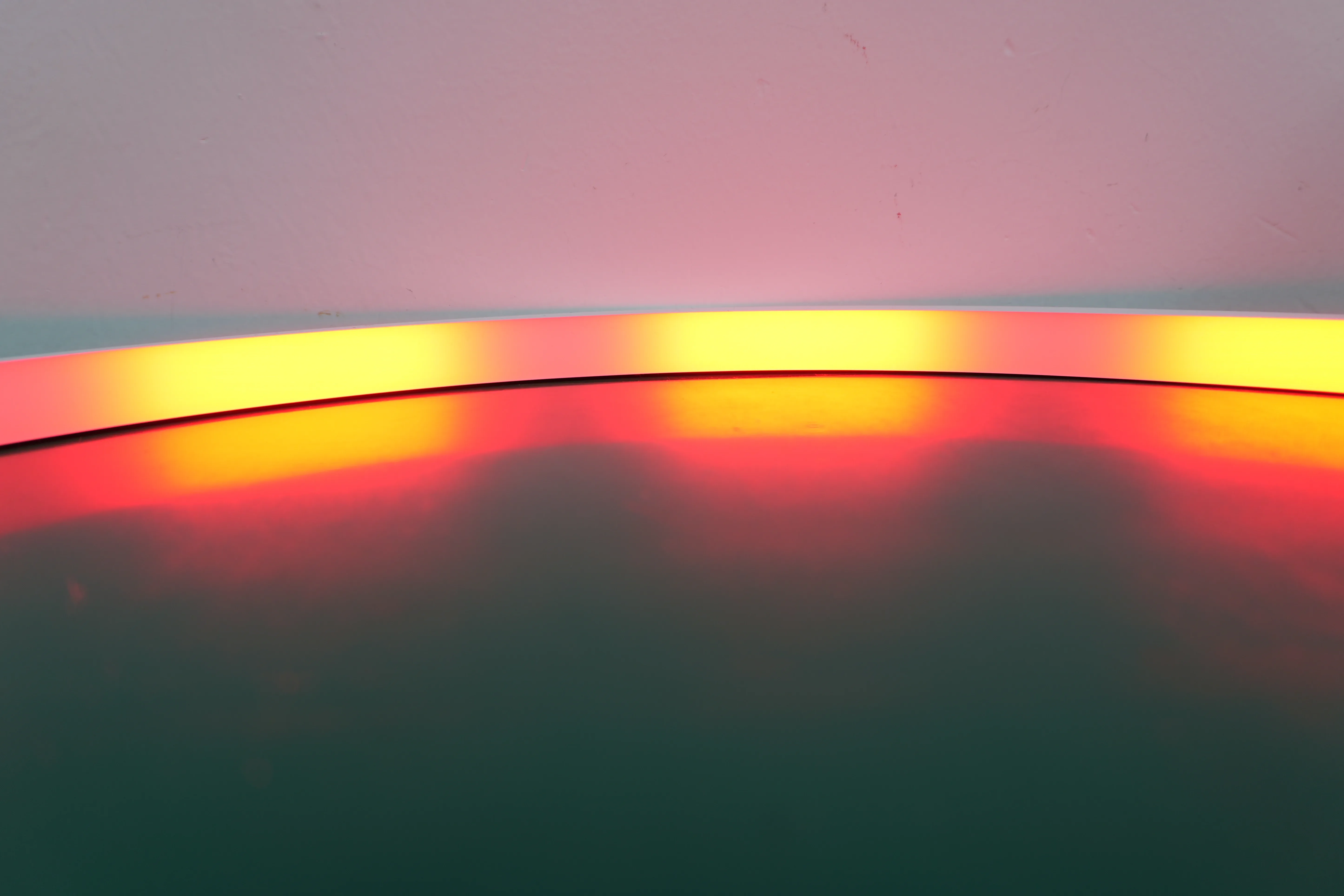
Chasing Effects
Lighting sequences moving along the neon line.
Pixel / Segment Effects
Different controllable sections can display different colors or brightness levels where supported by the pixel architecture.
Synchronized Lighting
Multiple neon sections can be programmed as part of a coordinated lighting scene.
This makes DMX neon flex especially relevant when the lighting is intended to become an active part of the architectural design rather than simply provide illumination.
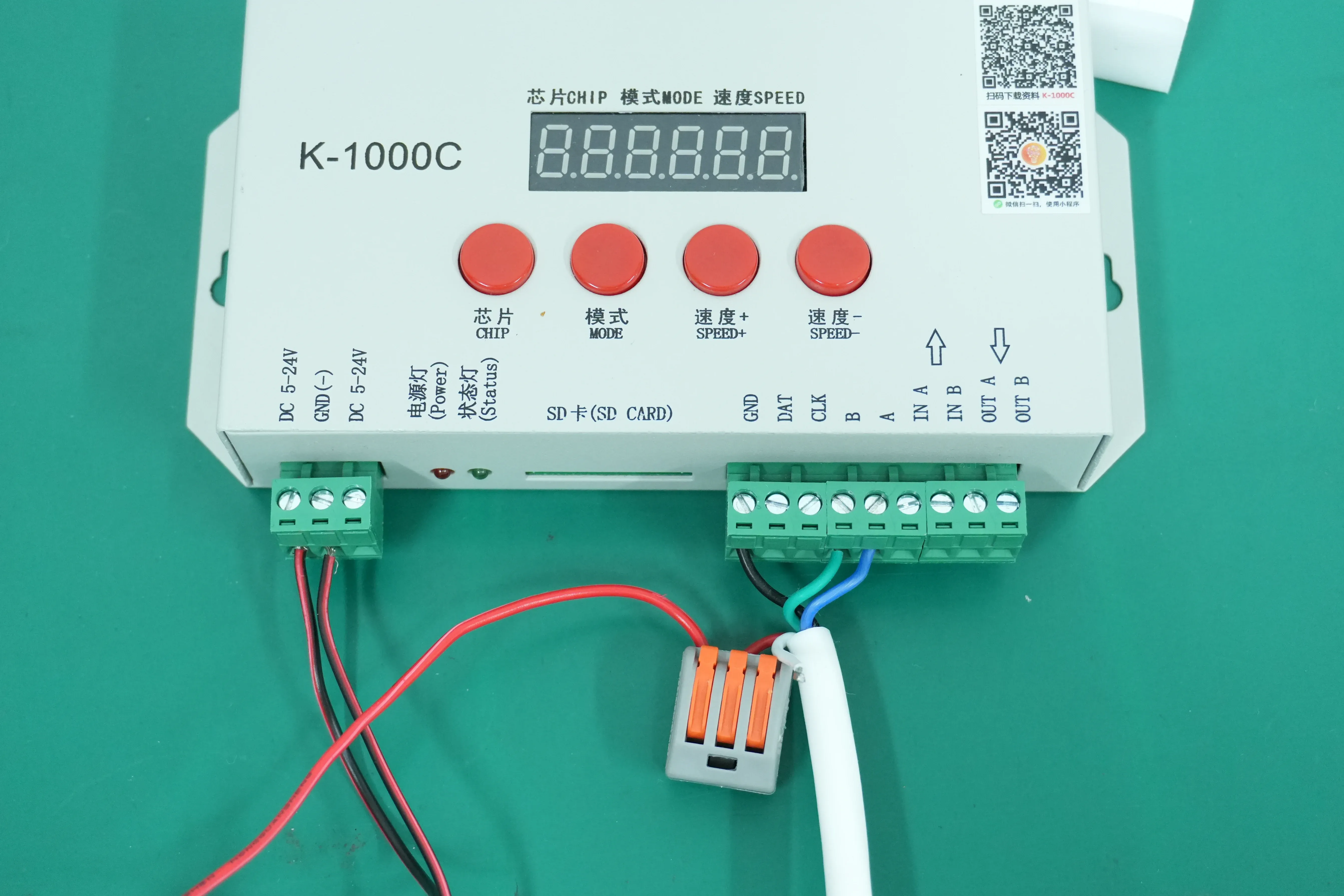
DMX512 RGBW Neon Flex Wiring: What Does a Complete System Need?


1. Select the Correct Power Supply
The power supply must match the rated voltage and total load of the neon flex.
For longer installations, do not calculate only the total wattage.
Also consider:
- cable size
- voltage drop
- maximum recommended run length
- power injection locations
- controller capacity
- safety margin for the power supply
This becomes particularly important in architectural projects where one continuous visual line may extend for several meters.
2. Confirm Controller Compatibility
Not every controller labeled “DMX512” should automatically be assumed to work with every digital RGBW neon flex.
Before production, confirm:
- DMX controller model
- output/interface requirements
- IC compatibility
- RGBW order
- addressing method
- pixel configuration
- programming requirements
If the customer already has a controller, providing the controller model or datasheet before production can prevent compatibility problems later.
How Are DMX Channels Used for RGBW?
A basic RGBW control group requires four color values:
DMX Value | Function |
|---|---|
R | Red intensity |
G | Green intensity |
B | Blue intensity |
W | White intensity |
However, the actual DMX channel allocation of an addressable neon system depends on the controller and pixel architecture.
For this reason, system integrators should confirm the actual channel mapping rather than assuming that every physical LED consumes four DMX channels.
This becomes increasingly important when a project contains many independently controlled pixels.
DMX512 Neon Flex vs Standard RGBW Neon Flex
| Standard RGBW Neon | DMX512 RGBW Neon |
|---|---|---|
RGBW color | Yes | Yes |
Whole-run color control | Yes | Yes |
Addressable effects | Usually no | Depending on pixel configuration |
Chasing effects | Limited / No | Yes, where configured |
Multiple programmable sections | Limited | Yes |
DMX system integration | No | Yes |
Best suited for | Static / uniform RGBW lighting | Dynamic architectural lighting |
Choose standard RGBW neon when:
The project mainly requires the entire neon section to change color together.
Consider DMX512 RGBW neon when:
The project requires programmable sections, chasing effects, dynamic color sequences or integration into a DMX lighting system.
That distinction can prevent unnecessary control complexity and cost.
Where Is DMX512 RGBW 20x20 Neon Flex Used?
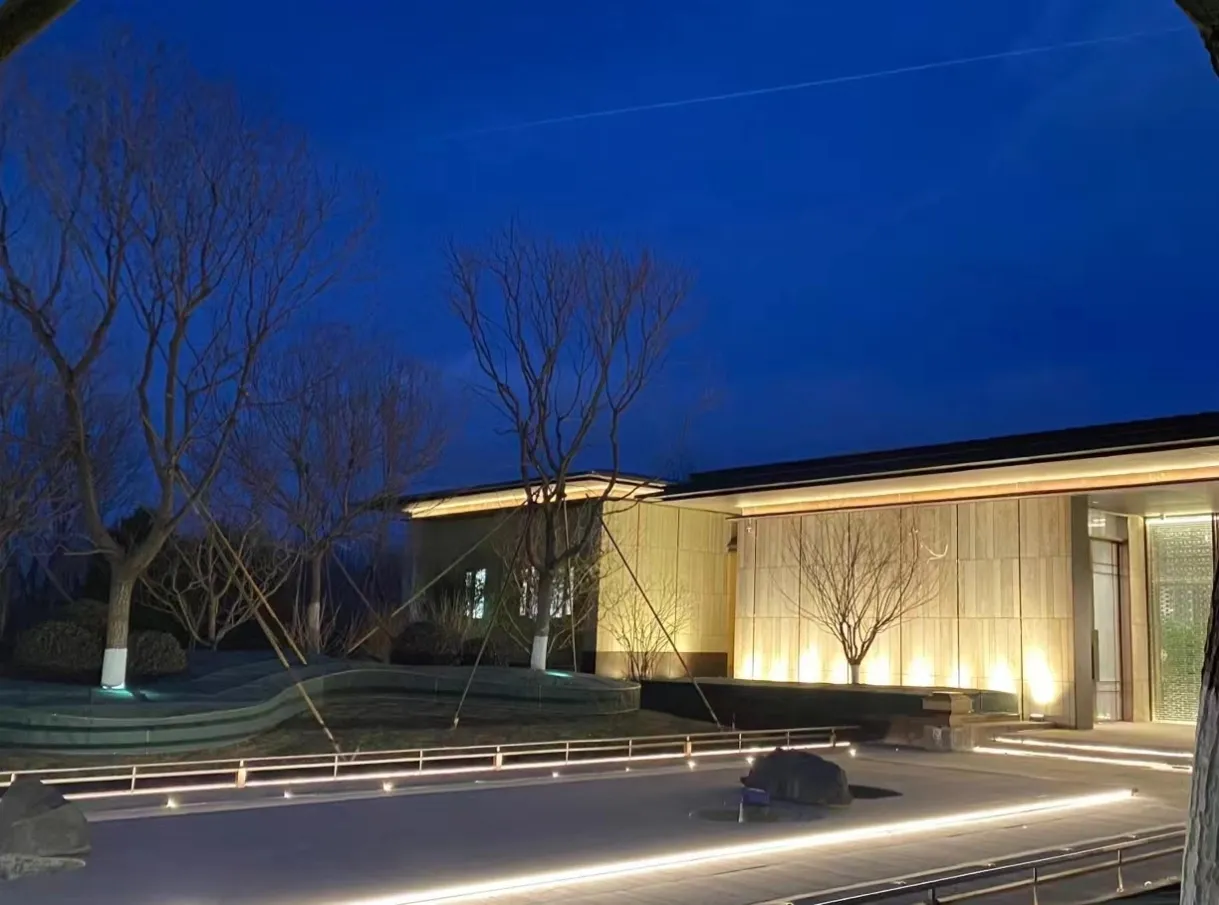
Architectural Facade & Building Outline Lighting


7
The 20x20mm illuminated profile can be incorporated into building outlines and architectural features where a visible continuous line of light is required.
DMX control can add programmed color movement and synchronized effects across different sections of a facade.
Hotels, Restaurants & Hospitality


6
RGBW neon flex can be integrated into ceilings, walls, architectural details and decorative elements.
Different lighting scenes can then be programmed for different environments, events or operating periods.
Entertainment & Themed Environments


5
Programmable neon lighting is particularly useful where movement and color form part of the visual experience.
Applications can include entertainment venues, event spaces, themed interiors and interactive lighting installations.
Curved Architectural Features


7
Flexible neon can follow curved architectural elements within the permitted bending direction and radius of the selected profile.
Before designing a curved installation, always confirm:
- bending direction
- minimum bending radius
- cutting interval
- mounting method
- cable exit direction
This should be checked before the neon is manufactured to final project lengths.
How to Specify DMX512 RGBW Neon Flex for a Project
This is the information we recommend confirming before requesting production:
1. Neon Size
For this product family:
20 × 20mm
But other profile dimensions may be considered depending on the project.
2. Total Length & Individual Sections
Do not provide only the project's total meter quantity.
If possible, provide individual section lengths.
For example:
3.2m + 6.5m + 8.7m + 4.1m
This helps determine cutting, wiring and power arrangements.
3. Required Lighting Effects
Tell the manufacturer whether you need:
- uniform RGBW control
- chasing
- flowing effects
- individual pixel control
- synchronized zones
- programmed scenes
4. Controller
If the controller is already selected, provide:
brand + model + datasheet
This allows compatibility to be checked before production.
5. Installation Environment
Specify whether the installation is:
- indoor
- outdoor
- wet location
- exposed facade
- concealed architectural detail
The appropriate product construction should be selected according to the actual environment.
6. Wiring Requirements
Provide the required:
- cable length
- cable exit direction
- connectors
- single-end / dual-end wiring requirements
- power injection points
For a project-specific product, these details are much easier to solve before production than on site.
Can DMX512 RGBW Neon Flex Be Customized?
Yes, depending on the project and product configuration.
CEFC LIGHTING can discuss project-specific requirements including:
- neon profile
- RGBW configuration
- project lengths
- wire lengths
- connectors
- cable exit direction
- control configuration
- mounting accessories
- labeling
- OEM packaging
For OEM and project customers, drawings and wiring information can also be prepared according to the confirmed product configuration.
Common Questions About DMX512 RGBW 20x20 Neon Flex
Is DMX512 the same as addressable RGBW?
Not exactly.
DMX512 describes the control communication system, while “addressable” describes the ability to control different pixels or sections independently.
The actual addressable resolution depends on the neon flex's IC and pixel architecture.
Can every LED be controlled individually?
Not necessarily.
Some products control groups of LEDs as one pixel. Always confirm the number of independently controllable pixels per meter.
Can one DMX controller control multiple neon sections?
Potentially yes, depending on controller capacity, channel allocation and the architecture of the lighting system.
The complete project should be evaluated before determining the controller configuration.
Can the same remote or system control multiple zones?
This depends on the selected controller and system architecture.
Multiple zones can be designed to operate independently or together where supported by the controller.
Can DMX RGBW neon create chasing effects?
Yes, where the product's pixel architecture and controller programming support the required chasing sequence.
Can it be used outdoors?
Outdoor suitability depends on the IP construction of the selected neon, cable entry, connectors, end caps and complete installation method.
Do not evaluate outdoor suitability from the neon body's IP rating alone.
What controller information should I send?
The most useful information is:
controller brand + model + datasheet + desired lighting effect.
This allows compatibility to be checked before production.
What information do you need for a quotation?
For a faster project evaluation, send:
Profile size + individual lengths + quantity + voltage + RGBW requirements + required effects + controller model + installation environment + wiring requirements.
A drawing is even better.
Planning a DMX512 RGBW Neon Flex Project?
Instead of selecting a neon flex only from a product specification table, start with the lighting effect and installation layout.
Send CEFC LIGHTING:
1. Project drawing or layout
2. Individual neon lengths
3. Required RGBW effects
4. Controller model
5. Installation environment
6. Wire and connector requirements
We can review the information and discuss a suitable DMX512 RGBW 20x20 Neon Flex configuration for your project.
Need to test it first? Ask us about sample availability for your controller and lighting setup.