Jun 26, 2026News & Insights
COB vs SMD LED Strips: Which is Right for Your Lighting Needs?
COB vs SMD LED Strips
LED strip lights have revolutionized modern lighting, offering versatility and energy efficiency for a wide range of applications. Among the various types available, COB (Chip on Board) and SMD (Surface Mounted Device) LED strips are two of the most popular choices. Understanding their differences is crucial for selecting the best option for your specific lighting project. This blog post will delve into a comprehensive comparison of COB and SMD LED strips, highlighting their unique characteristics, advantages, disadvantages, and ideal applications.
What is an SMD LED Strip?
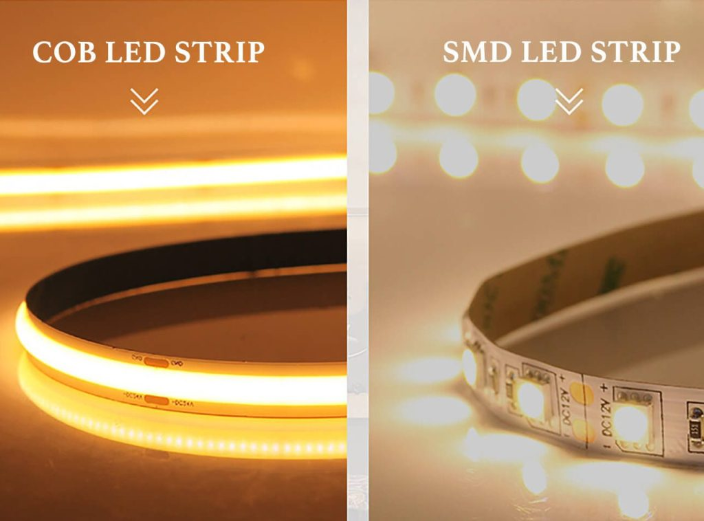
SMD LED strips are characterized by individual LED chips (diodes) that are directly soldered onto a printed circuit board (PCB). These chips are typically visible as distinct dots along the strip. SMD technology has been around since the 1960s and has evolved significantly, becoming a dominant force in the LED market due to its compact size and versatility. Common SMD types include 3528 and 5050, with the numbers indicating the dimensions of the LED chip in millimeters.
Advantages of SMD LED Strips:
Cost-Effective: Generally more affordable to produce, making them a budget-friendly option for many projects.
Color Versatility: SMD strips can incorporate multiple LED chips (e.g., red, green, blue) into a single diode, allowing for a wide range of color options, including RGB and RGBW.
Brightness Variety: Available in various sizes and configurations, offering different brightness levels to suit diverse needs.
DIY Friendly: Often come with self-adhesive backing, making them easy to install for DIY enthusiasts.
Disadvantages of SMD LED Strips:
Visible Hotspots: The individual LED chips create distinct light dots, which can result in a less uniform light output, especially when the strip is exposed.
Less Efficient Heat Dissipation: Individual diodes can generate more heat, potentially impacting longevity if not properly managed.
Bulkier Design: Compared to COB, SMD strips can be slightly bulkier due to the spacing between individual chips.
Prone to Damage: Individual diodes are more susceptible to physical damage or failure.
What is a COB LED Strip?
COB LED strips represent a more advanced technology where numerous small LED chips are directly mounted onto a flexible circuit board and then covered with a uniform phosphor layer. This design creates a continuous, seamless line of light without visible individual dots, offering a highly uniform and aesthetically pleasing illumination. COB technology gained popularity in the 2000s and has since become a preferred choice for applications demanding high-quality light output.
Advantages of COB LED Strips:
Uniform, Dot-Free Light: The most significant advantage is the smooth, continuous light output, eliminating visible hotspots and creating a clean, professional look.
Higher Brightness: Due to the high density of LED chips packed closely together, COB strips generally offer higher brightness per meter.
Better Heat Dissipation: The chip-on-board design allows for more efficient heat dissipation, contributing to a longer lifespan and stable performance.
Slim and Flexible Design: Their compact nature allows for thinner and more flexible strips, making them ideal for tight spaces and intricate installations.
Increased Durability: The protective phosphor layer makes COB strips more resistant to dust and physical damage.
Disadvantages of COB LED Strips:
Higher Cost: The advanced manufacturing process and superior performance typically result in a higher price point compared to SMD strips.
Limited Color Options: While multi-color COB strips are emerging, they generally offer fewer color variations than SMD strips, often focusing on single-color temperatures.
COB vs SMD LED Strips: A Comprehensive Comparison Table
To further illustrate the differences, here's a comparative overview of COB and SMD LED strips:
Feature | COB LED Strips | SMD LED Strips |
|---|---|---|
Light Quality | Uniform, dot-free, continuous illumination | Visible individual LED dots (hotspots) |
Brightness | Generally higher brightness per meter | Variable, depends on SMD chip type (e.g., 5050) |
Energy Efficiency | More efficient | Slightly less efficient |
Heat Management | Better heat dissipation | Moderate, varies by design |
Design | Slim, seamless, highly flexible | Slightly bulkier, visible LED points |
Durability | More resistant to dust and physical damage | Individual diodes more prone to damage |
Cost | Higher | Lower, more cost-effective |
Best Applications | Task lighting, architectural accents, decor where the strip is visible, commercial spaces | Accent lighting, ambient lighting, DIY projects, backlighting, areas where the strip is hidden |
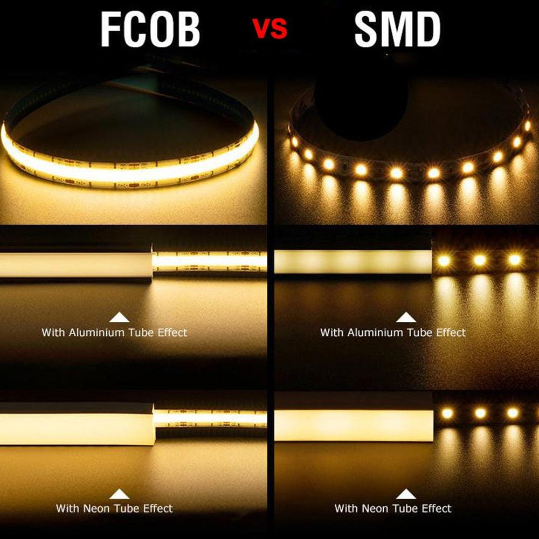
Applications of COB and SMD LED Strips
Both COB and SMD LED strips have their unique strengths, making them suitable for different applications:
Ideal Applications for COB LED Strips:
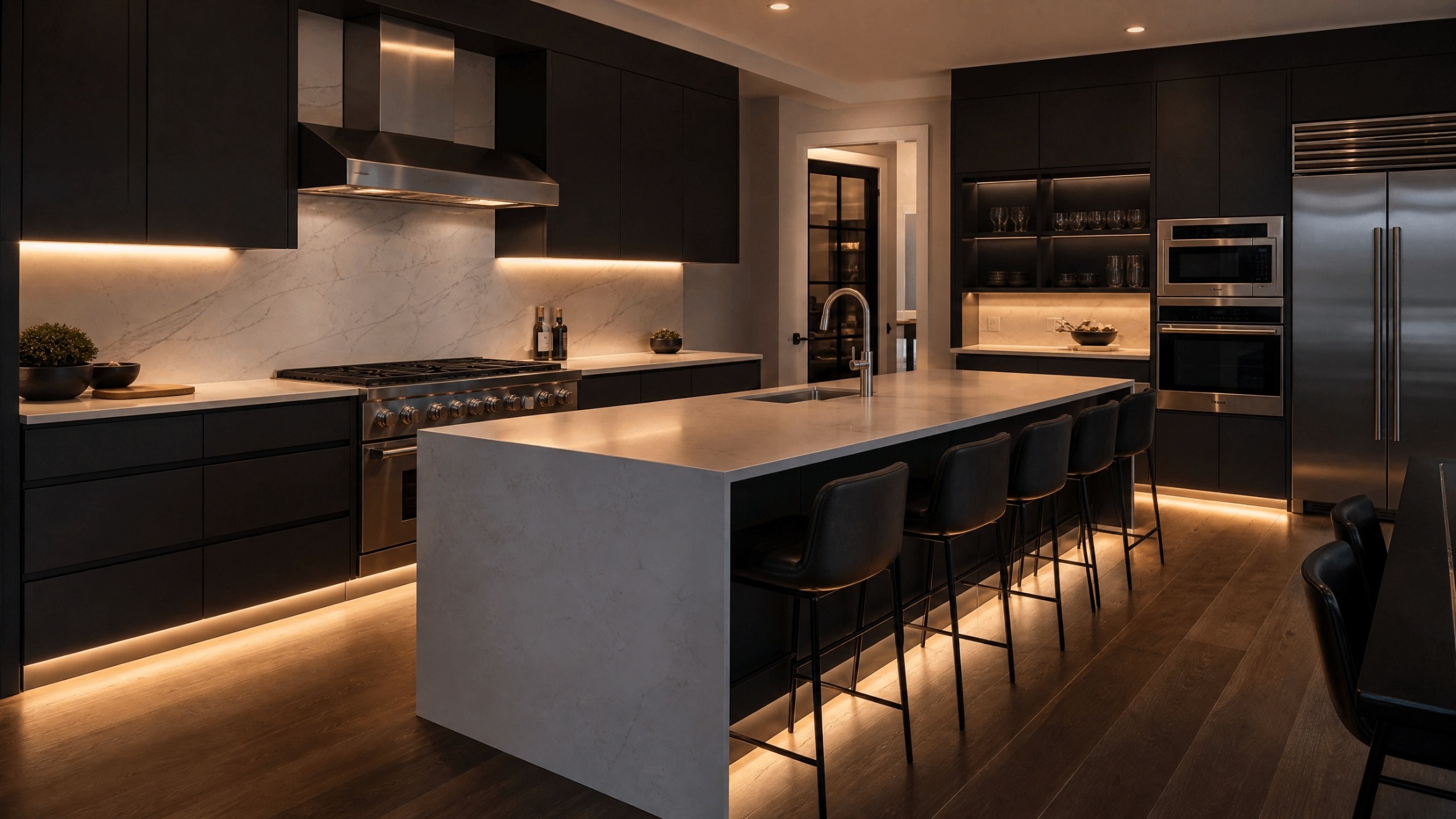
Task Lighting: Excellent for under-cabinet lighting, workbench illumination, or any area requiring bright, uniform light without distracting dots.
Architectural Lighting: Perfect for highlighting architectural features, coves, and intricate designs where a seamless light line is desired.
Retail Displays: Provides high-quality, even illumination for product displays, enhancing visual appeal.
Commercial Spaces: Suitable for offices, hotels, and restaurants where a sophisticated and uniform lighting aesthetic is important.
Decorative Lighting (Visible Strips): When the LED strip itself is visible, COB offers a much cleaner and more premium look.
Ideal Applications for SMD LED Strips:
Accent Lighting: Great for creating ambient light effects, such as backlighting TVs, shelves, or furniture.
DIY Projects: Their affordability and ease of installation make them popular for various home projects.
Backlighting: Effective for illuminating signs, panels, or translucent materials where the individual dots are not a concern.
Hidden Installations: When the LED strip is concealed (e.g., in a cove or behind a diffuser), the visible dots of SMD strips are less of an issue.
Color-Changing Applications: SMD RGB/RGBW strips are ideal for dynamic color effects and mood lighting.
Conclusion
Choosing between COB and SMD LED strips ultimately depends on your specific needs, aesthetic preferences, and budget. If you prioritize a seamless, dot-free, and highly uniform light output for visible installations or task lighting, COB LED strips are the superior choice, despite their higher cost. However, if budget is a primary concern, or if the LED strip will be hidden and color versatility is important, SMD LED strips offer a practical and effective solution. By understanding the distinct characteristics of each technology, you can make an informed decision to illuminate your space perfectly.