Jun 26, 2026News & Insights
Comparative Analysis of AC12V AC Voltage LED Strips and DC12V DC Voltage LED Strips
Comparative Analysis of AC12V AC Voltage LED Strips and DC12V DC Voltage LED Strips
Comparative Analysis of AC12V AC Voltage LED Strips and DC12V DC Voltage LED Strips
Introduction
LED strips have become a popular lighting solution for homes, offices, and industries due to their energy efficiency, long lifespan, and versatility. When choosing LED strips, a key consideration is their power supply type: Alternating Current (AC) or Direct Current (DC). This article will provide a detailed comparison of AC12V AC voltage LED strips and DC12V DC voltage LED strips in terms of technical characteristics, performance, application scenarios, advantages, and disadvantages, to help users make informed decisions.
1. Basic Principles and Power Supply Methods
1.1 DC12V DC Voltage LED Strips
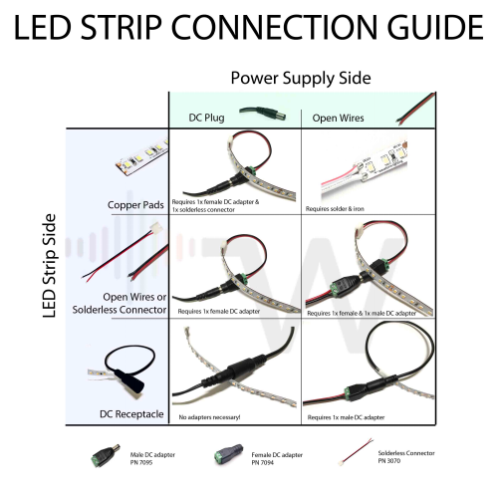
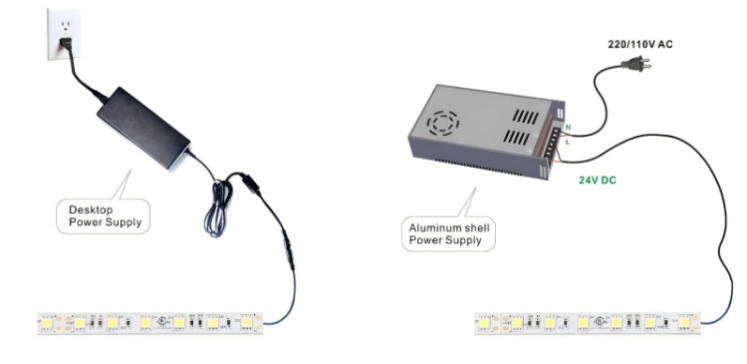
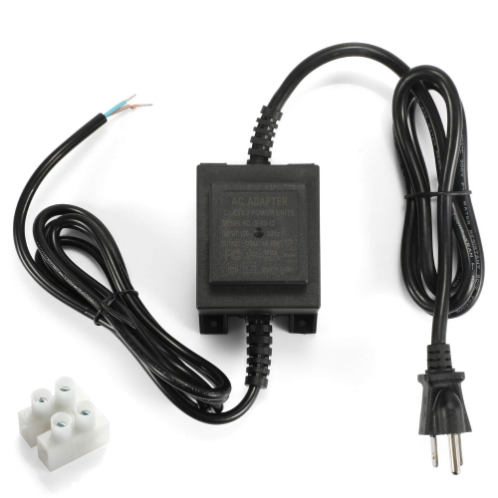
Direct Current (DC) is an electric current where the direction and magnitude of the voltage remain constant. LEDs (Light Emitting Diodes) are semiconductor devices that inherently require DC power to emit light properly. DC12V DC strips are directly powered by a 12-volt DC source. This means that if the power source is AC (such as household mains), an external AC-DC converter (i.e., power adapter or driver) is required to convert the AC power into stable 12V DC to power the strip.
1.2 AC12V AC Voltage LED Strips
Alternating Current (AC) is an electric current where the direction and magnitude of the voltage change periodically. AC12V AC strips are directly powered by a 12-volt AC source. Since LED chips require DC power, AC12V strips typically integrate a rectifier circuit (such as a bridge rectifier) internally to convert the input 12V AC into pulsating DC, which is then filtered and supplied to the LEDs.
2. Technical Characteristics Comparison
Feature | DC12V DC Voltage LED Strips | AC12V AC Voltage LED Strips |
Power Type | Direct Current (DC) | Alternating Current (AC) |
LED Drive | Directly powered by 12V DC | Internal rectifier circuit converts AC to pulsating DC for LEDs |
Polarity Req. | Strict positive/negative polarity; incorrect connection prevents lighting or causes damage | No polarity requirement; wiring is relatively simpler |
Voltage Fluct. | Relatively stable; stability depends on power supply quality | 12V AC has a peak voltage of approx. 17V; internal circuit must handle this peak |
Flicker | Usually flicker-free (depends on power supply quality) | May have noticeable flicker if filtering is poor [4] |
Efficiency | Higher; energy loss mainly occurs in the external AC-DC converter | Lower; internal rectification and filtering cause additional energy loss |
Safety | 12V low voltage, extremely low shock risk, relatively lower heat generation | 12V low voltage, low shock risk, but internal conversion may generate more heat |
Cutting Length | Typically shorter, e.g., cuttable every 3 LEDs | Typically longer due to internal circuit design limitations |
Voltage Drop | Sensitive to voltage drop; long runs require thicker wires or multiple power feeds | Internal circuit design may offer some compensation for voltage drop, but long runs are still affected |
3. Advantages and Disadvantages Analysis
3.1 DC12V DC Voltage LED Strips
Advantages:
- High Efficiency and Low Heat: LEDs are directly driven by DC, resulting in high energy conversion efficiency and low heat generation, which helps extend the lifespan of the light strip.
- Flicker-Free: As long as the external AC-DC converter provides stable output, the strip can achieve flicker-free illumination, which is more comfortable for the eyes.
- High Safety: 12V low voltage DC power has an extremely low risk of electric shock, making it suitable for damp environments or areas accessible to children.
- Wide Compatibility: Can be directly used with DC power sources like batteries and solar panels, suitable for automotive, marine, or outdoor camping applications.
- Stable Color Performance: LED color and brightness performance are more stable under DC power.
Disadvantages:
- Requires External Power Conversion: Must be used with an AC-DC converter, increasing system cost and installation complexity.
- Polarity Requirement: Care must be taken with positive and negative connections; incorrect wiring will prevent lighting or cause damage.
- Voltage Drop Issues: Prone to voltage drop over long wiring runs, leading to uneven brightness at the end of the strip.
3.2 AC12V AC Voltage LED Strips
Advantages:
- Simple Wiring: No polarity requirement, making wiring relatively convenient, especially for replacing traditional 12V AC halogen lamps.
- Utilizes Existing AC Transformers: In some landscape lighting scenarios, existing 12V AC transformers can be directly utilized, simplifying upgrades.
- Simplified Installation: Theoretically, due to internal rectification, it is less sensitive to power line polarity, simplifying the installation process.
Disadvantages:
- Lower Efficiency: The internal rectification process causes energy loss, leading to lower overall efficiency compared to DC strips.
- Potential for Flicker: If the internal filtering circuit is poorly designed, noticeable flicker may occur, affecting the user experience.
- Relatively Higher Heat Generation: Internal rectifier components generate heat during operation, which may affect the lifespan of the light strip.
- Circuit Complexity: The strip itself requires integrated rectification and filtering components, increasing its complexity and potential points of failure.
- Handling Peak Voltage: The peak voltage of 12V AC is approximately 17V; internal components must be able to withstand and effectively handle this peak voltage, otherwise stability or lifespan may be affected.
4. Application Scenarios
- DC12V DC Voltage LED Strips:
- Indoor Decorative Lighting: Such as cabinet lighting, accent wall lighting, display case lighting, where high light quality and safety are required.
- Automotive and Marine Lighting: Directly utilizes the vehicle's or vessel's 12V DC power supply.
- Solar Lighting Systems: Used in conjunction with solar panels and batteries.
- Outdoor Low-Voltage Landscape Lighting: Used in outdoor environments requiring safe low voltage, but attention must be paid to waterproofing and voltage drop.
- AC12V AC Voltage LED Strips:
- Outdoor Landscape Lighting Renovation: Especially when existing lighting systems already use 12V AC transformers, they can directly replace traditional halogen lamps, simplifying renovation.
- Certain Special Industrial or Commercial Lighting: Used in specific AC low-voltage power supply environments.
5. Conclusion and Recommendations
Overall, DC12V DC voltage LED strips are often the superior choice for most LED lighting applications due to their higher efficiency, better light quality (flicker-free), and enhanced safety. They offer more stable illumination and a longer lifespan, despite requiring an additional AC-DC converter.
AC12V AC voltage LED strips' primary advantage lies in their compatibility with existing 12V AC power sources, making them particularly suitable for renovation projects like outdoor landscape lighting, where they can eliminate the need to replace transformers. However, users should be aware of potential flicker and lower efficiency.
When making a choice, it is recommended to consider the specific application scenario, light quality requirements, ease of installation, and budget. For scenarios demanding optimal performance and user experience, DC12V strips are preferred; for renovation projects leveraging existing AC infrastructure, AC12V strips offer a more convenient solution.